
September’s dealer signal: more technology needs better handoffs
Booking a service visit. Moving a deal into finance. Asking an employee to take over from AI. September’s reporting pointed to the same question: does the next step actually work?
The signal
In One View
September’s dealership technology signal is about continuity. Better individual tools create value only when the customer, their information and the next action arrive together. AutoIntel’s interpretation: the next useful technology test is a completed journey, including the point where software needs a person to take over.
- Service scheduling improved, while difficult requests and transfers still exposed gaps.
- F&I research identified friction when employees moved information between systems.
- A dealer’s AI experience offered a different starting point: solve a specific operating problem.
What September’s Reporting Revealed
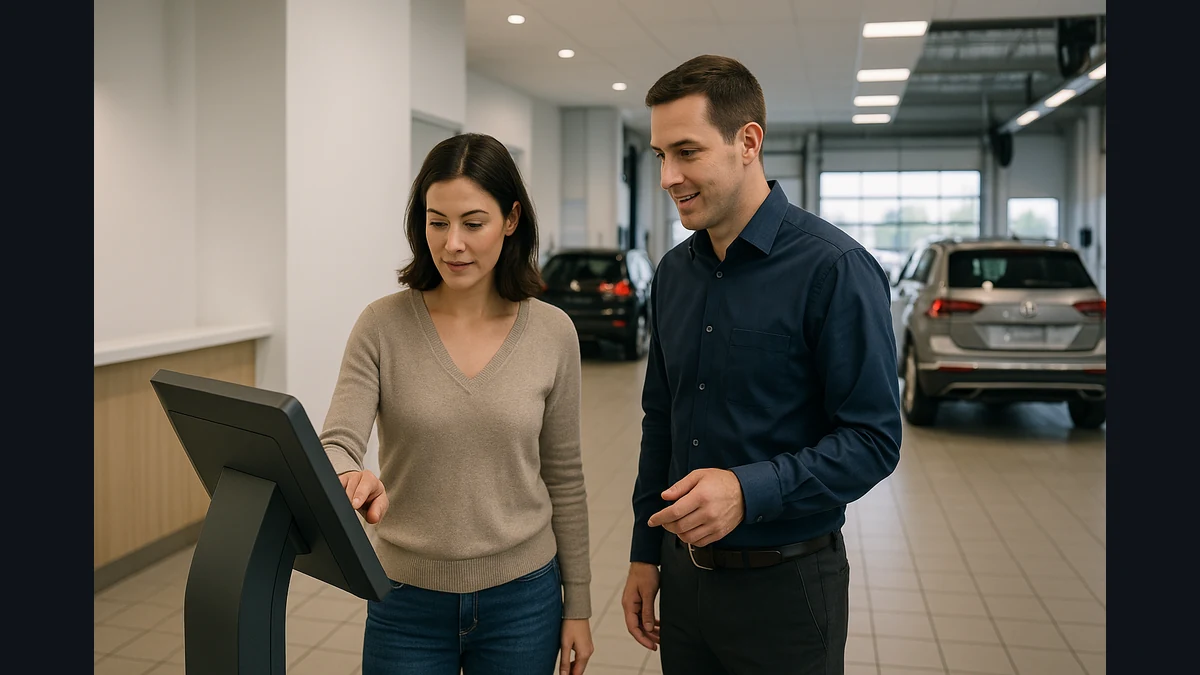
Pied Piper’s September 14 service-scheduling study described genuine progress. Its industry average rose seven points, and website scheduling improved more than telephone scheduling. Yet roughly one in three attempted transfers from AI to a person failed. The findings came from 6,538 service requests across 33 U.S. automobile brands and four independent service-center brands.[1]
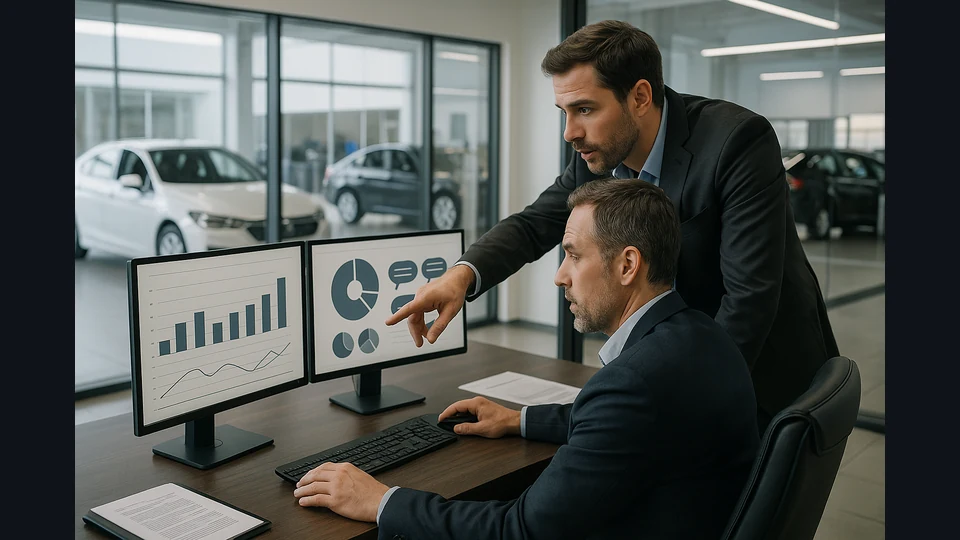
Later in the month, coverage of CDK’s 2026 Friction Points Study brought another transition into focus. CDK reported that 72% of dealership F&I offices used four or more software solutions to complete a deal. Its September 18 analysis described employees moving deal information across platforms, checking transferred records and managing changes while a transaction was in progress.[2]
These are different processes and different research methods. They do not establish one universal failure rate. Their useful connection is narrower: an individual tool can perform its task while the broader customer journey still has a weak link.
Why It Matters: the Customer Experiences One Dealership
A customer does not experience a service scheduler, a customer database and a finance platform as separate purchases. They experience one dealership. Repeating a request, explaining the same circumstances twice or waiting for someone to recover missing information can make a technically capable business feel disorganized.
That changes the question behind a technology purchase. Instead of stopping at whether a system answers quickly or generates a useful response, follow what happens afterward. Does someone accept the request? Is the appointment confirmed? Can the next employee understand what has already happened?
AutoIntel’s interpretation is that continuity deserves its own place in operating reviews. Responsiveness and completion answer different questions. A quick first answer is useful, but it should not hide an unresolved customer need.
Connecting the Tools to a Specific Problem
A September 17 CBT News interview with World Automotive Group owner Scott Falcone offered a practical contrast to buying technology for its own sake. Falcone described developing AI tools around particular dealership problems, including helping service employees explain technical issues to customers. His account emphasized giving employees useful capabilities rather than treating replacement of staff as the objective.[3]
That is one operator’s experience, not a controlled comparison or proof that custom software is the best route for every store. Its value here is the order of decisions: identify the task, understand the people involved and then decide what technology would improve the work.
The connection across these reports is not that dealerships need one giant platform. It is that the boundary between platforms, departments or automation and staff needs an owner. Integration should be judged by what survives the transition, including context and responsibility, rather than by the existence of a connection alone.
Industry Implications
For dealer principals and operating managers, technology reviews can start with a few real customer journeys. Follow a service inquiry through to a confirmed visit, or a purchase inquiry through the handoff into finance. Record where the next action becomes unclear before assuming another subscription will solve it.
For software providers, a more persuasive demonstration is a completed task that includes a changed request, incomplete information or a need for human help. Vendors and dealers can agree in advance on what should happen in those cases and who will resolve the exception.
For employees, clear ownership matters alongside access to tools. Knowing who receives the next step, what information they need and how to recover a failed transfer makes the intended workflow easier to use under everyday pressure.
Risks
The first risk is confusing software count with operating quality. Four systems can work together effectively; one system can still support a poor process. CDK’s statistic describes usage, while the workflow issues it discusses require examination at the individual store.[2]
A second risk is evaluating only the easiest interaction. Routine requests can make an automated process look stronger than it is when the customer changes direction. These reports also cannot quantify lost revenue at a particular dealership. That requires local evidence rather than multiplying a national research finding by an assumed transaction value.
Opportunities
Choose one recurring handoff and define what success looks like. For example, the receiving employee has the customer’s request, relevant context and a clear next action. Then review a small set of completed and failed interactions before extending automation into more complex work.
The opportunity is to make improvement observable. Track whether the task finished, whether information had to be repeated and whether a person took responsibility when needed. Those measures give an operating team something concrete to discuss with a vendor or internal developer.
What to Watch After September
The test following September was whether better individual capabilities would translate into more reliable customer journeys. Questions worth carrying forward include:
- Do AI-to-human transfers reach someone able to act on the original request?
- Does a changed deal reach finance with the correct information?
- Do service appointments receive clear confirmation and a usable way to make changes?
- Are technology reviews examining completed outcomes alongside speed and activity?
September’s lesson is a practical one: the value of a new tool depends partly on the next person or system in the chain. Making that transition reliable is a specific improvement dealers can investigate, whatever technology they already own.
Behind the analysis
Evidence & Source Notes
Retrospective analysis published in November 2026 from retained September reporting; it was not originally published in September. The collection contains 22 JSON snapshots and 24 HTML editions. Parseable September source-story dates in the JSON run from September 1–29; the final HTML edition is September 30. September 30 source-story coverage is not established. Repeated URLs were deduplicated, but syndicated versions may overlap. Three selected sources were checked against their original publishers on November 8. The reports discussed were published during September; their study periods are not presented as September-only measurements. This is a thematic analysis, not comprehensive industry coverage. Connections, suggested checks and implications are AutoIntel interpretation. Later October or November outcomes were not used to portray September as predictive.
- Volkswagen Ranked Highest in 2026 Auto Industry Service Scheduling Effectiveness Study
Primary study release behind September 15 CBT News coverage retained in the collection. The denominator for the AI figure is attempted AI-to-human transfers, not all service requests. Brand averages do not describe every dealership.
- 3 Ways Streamlining F&I Processes Boost Your Bottom Line
Primary vendor-authored discussion of CDK’s 2026 Friction Points Study, checked against the September 22 CBT News story in the collection. The 72% figure is software usage, not a measured failure rate. CDK sells dealership software; commercial context matters.
- How Scott Falcone is building AI tools for his dealerships
Direct interview retained in the September collection. A practitioner account, not an independent audit of results or evidence that the same approach will work at every dealership.
The public podcast
Take the connected view with you.
Listen to AutoIntel Weekly for the developments and connections shaping the automotive industry.
Listen on Apple PodcastsListen to the public AutoIntel Weekly show.
AutoIntel Weekly Preview · Free
See the shifts.
Connect the week.
Three cross-source signals, one unlocked analysis, and a risk-and-opportunity preview—delivered free every Monday.
Get the Free Weekly PreviewSign up using the free Weekly Preview form on AutoIntel.News. $0 · Unsubscribe anytime. The Full Briefing is a separate paid subscription.